
Crossbill author Kees Woutersen — Birdwatcher and author of the Crossbill nature guides to the Spanish Pyrenees, Southern Portugal, Madeira, Tenerife and La Gomera, and Lanzarote and Fuerteventura — set out to test a boat trip for Crossbill Guides on the Guadalquivir River from Sanlúcar de Barrameda, on the edge of Doñana National Park.
The key question: is this boat excursion in Doñana worth recommending for birdwatching to Crossbill Guide readers? His verdict: yes it is! In this review, he shares his experience of birding along the Guadalquivir and what you can expect from this unique wildlife tour in southern Spain.
Birds galore
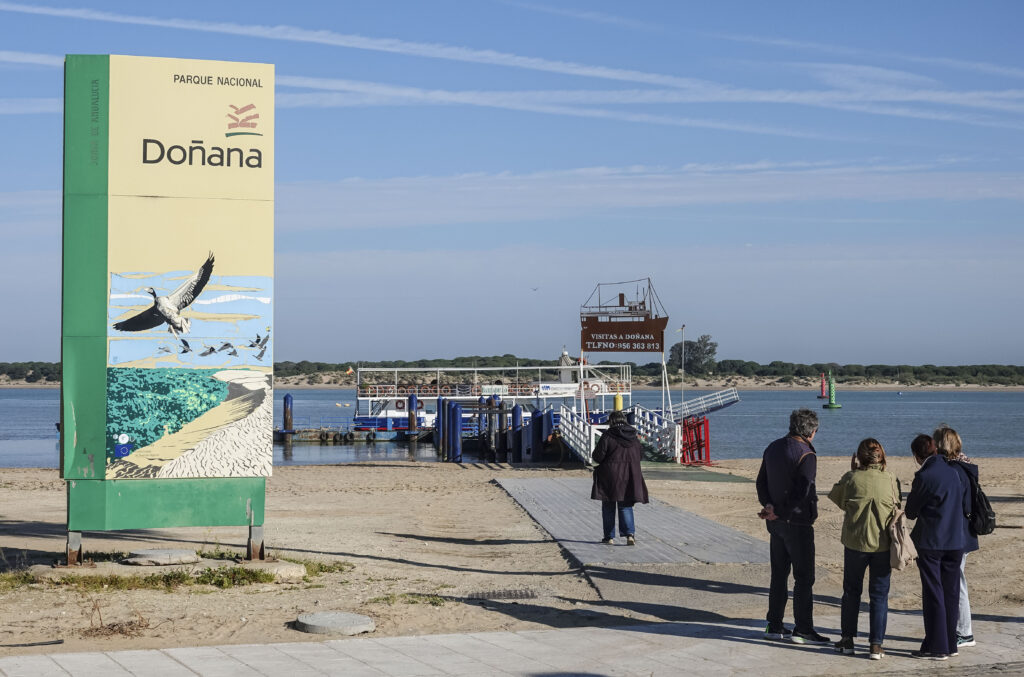
On the morning of March 25, 2026, we joined a visita fluvial (boat excursion) from Sanlúcar de Barrameda, lasting 2.5 hours (€30). At 10 a.m., we departed with around 80 fellow passengers from the wide estuary of the Guadalquivir—about 500 metres across—heading 6 kilometres upstream.
The weather was warm and calm, ideal for birding. It also marked the first real day of spring migration: small groups of bee-eaters were actively moving north, their calls clearly audible overhead. Before long, five Mediterranean gulls and two Caspian terns overtook the boat, flying purposefully upstream.
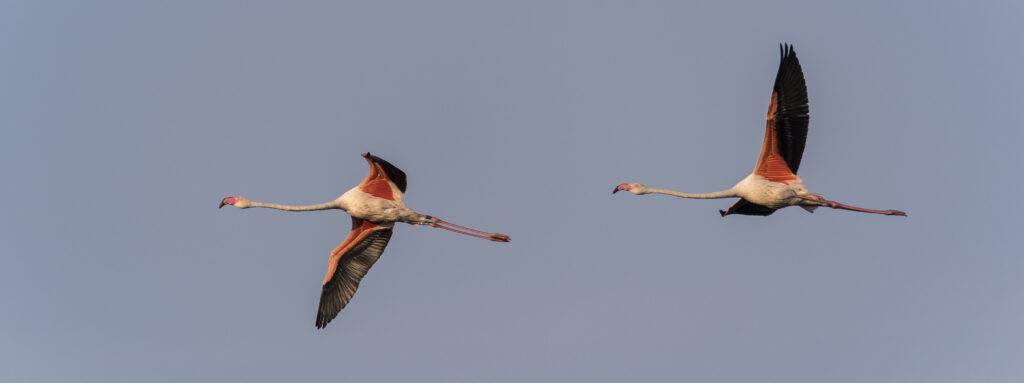
Along the right bank, distant flocks of waders fed on exposed mudflats at low tide, though identification was difficult at that range. Behind them rose the salt mounds of the Bonanza salt pans, with hundreds of flamingos visible in the distance.
On the left bank—much closer to the boat—the birding improved dramatically. Here we observed large numbers of waders, including turnstone, bar-tailed godwit, grey plover and whimbrel.
Further along, four pairs of gull-billed terns were engaged in elegant courtship displays as we passed. Ten minutes later, they overtook us again, continuing their migration north along the river.
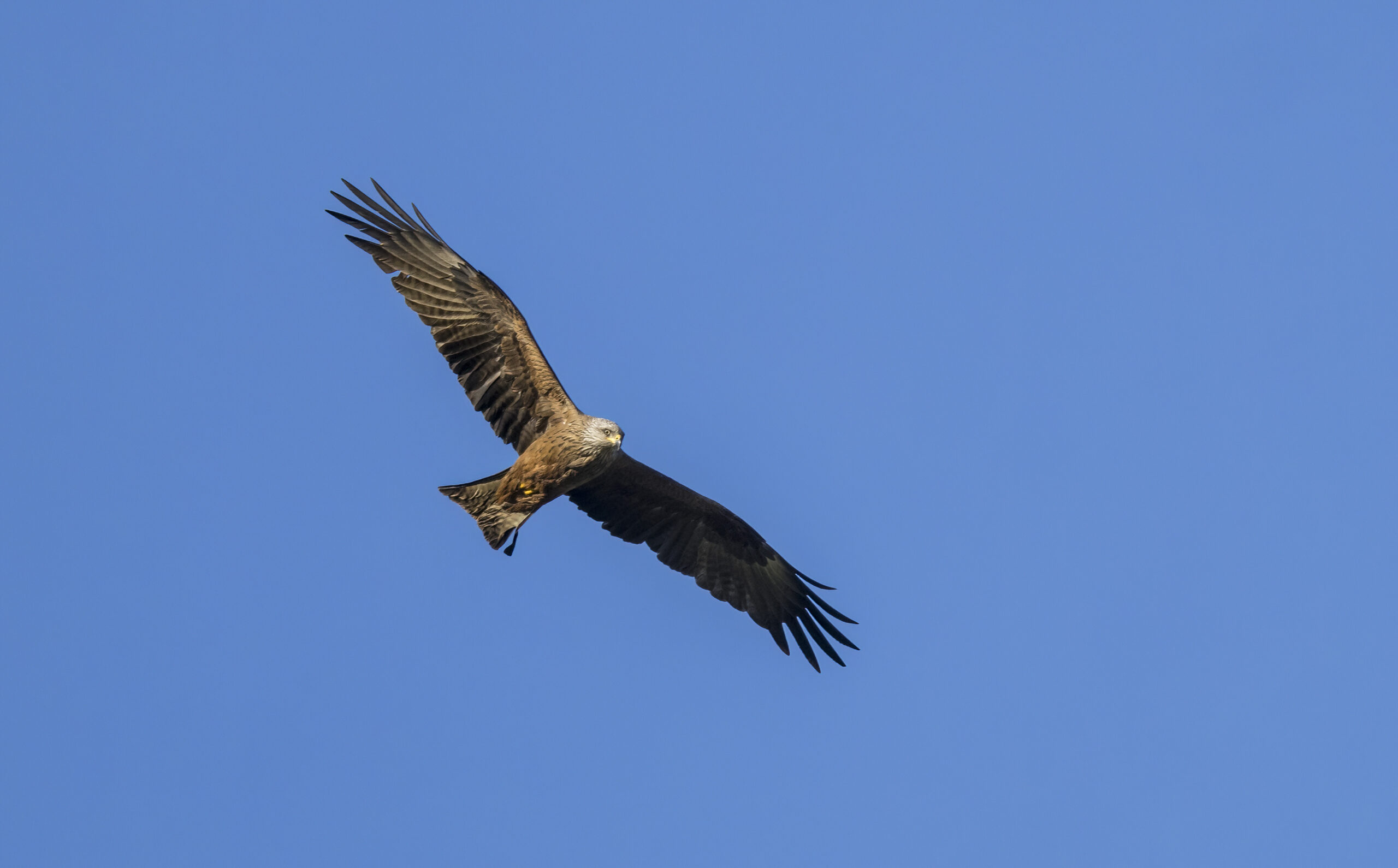
The left bank forms part of Doñana National Park, a strictly protected area where access is prohibited to minimise disturbance. We passed extensive stone pine forests, some of which clearly served as nesting sites for black kites. Dozens of birds were soaring and displaying above the treetops—an impressive sight.
Into the famous Doñana marshes
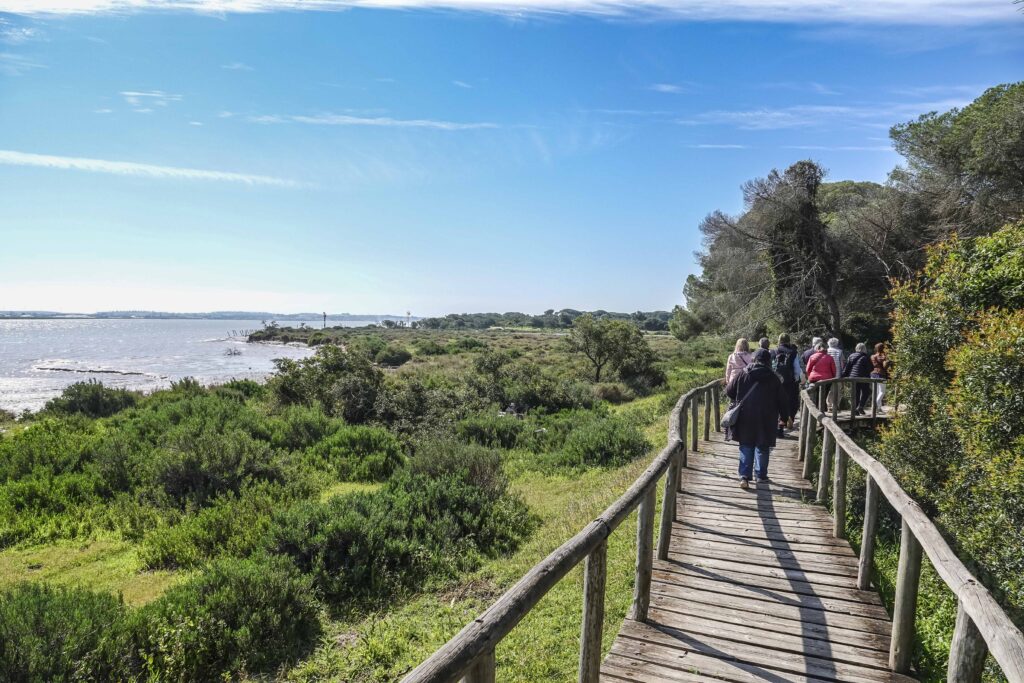
At the historic settlement of Poblado de la Plancha, we were invited to disembark for a one-hour walk.
A narrow forest trail led us through fragrant spring vegetation to a wildlife hide, where red deer and wild boar with young could be observed. On the return walk, just five metres from the path, we spotted a deer lying hidden with a newborn calf—remarkably, we had passed it earlier without noticing. We visited traditional sod huts made of branches and covered with wildflowers and grass, where we learned more about the history of this small settlement.
The boat continued further upstream along the edge of the famous Doñana marshes. In this wetland landscape, free-roaming cattle and horses grazed among flocks of birds. We saw Caspian terns again, large numbers of flamingos, groups of glossy ibis, a spoonbill, a stork’s nest, and several waders—mainly redshanks. Both great and little egrets appeared here for the first time during the trip.
This rich and varied birdlife made for a spectacular finale before we turned back toward Sanlúcar de Barrameda.
Costa Ballena: coastal birding and botany near Rota
In the evening, around sunset, we visited the beach near our campsite in Rota. On the dune ridge, we found a striking specimen of Orobanche densiflora, a rare parasitic plant (broomrape) that attaches itself to the roots of other plants.
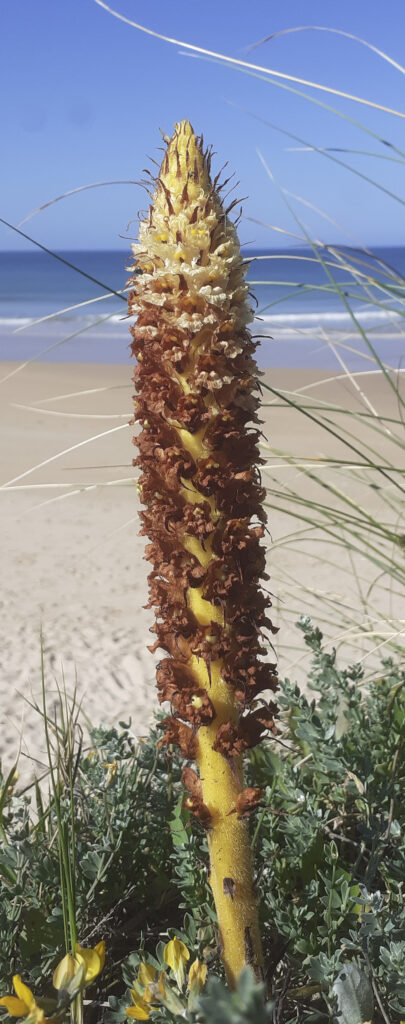
Along the coastal strip of Costa Ballena—where mass tourism has not yet taken hold—we also searched for chameleons, unfortunately without success. However, online reports confirmed sightings during the same period, particularly in the botanical garden of Rota, as described in the Crossbill Guide – Western Andalucía.
Is this Doñana boat trip worth it for birdwatchers?
Based on our experience, this Guadalquivir boat trip is highly recommended for birdwatchers and nature tourists visiting Doñana. It offers:
- Excellent views of waders and waterbirds
- A chance to observe migration along the river
- Access to otherwise restricted parts of Doñana National Park
- A combination of birding, landscape, and light walking
Practical information
- Departure point: Sanlúcar de Barrameda
- Duration: 2.5 hours
- Distance covered: ~6 km upstream
- Price: approx. €30
- Best for: birdwatching, nature photography, relaxed wildlife exploration