Scotland is one of Europe’s richest destinations for botanical tourism, with Arctic-alpine plants in the Highlands, orchid-rich machair grasslands on the west coast, ancient Caledonian pine forests and vast peatlands in the Flow Country.
By Edward Hutchings, author of the forthcoming Crossbill Guide to Scotland
I’ve spent enough seasons in Scotland now to know that its flora reveals itself slowly, almost shyly, as if testing whether you’re paying proper attention. The landscapes are famous—mountains, moors, lochs and coasts—but it’s the plants that give each place its texture, its scent, its sense of time. When I walk into a glen or step onto a machair meadow, I’m not just looking at scenery; I’m reading a living archive of climate, geology, grazing and human history. Scotland’s flora is never just botanical—it’s narrative.
The Highlands: Plants Written in Wind and Stone
In the Cairngorms, where the air thins and the granite asserts itself, the flora becomes stripped back to its essentials. I’ve walked those high plateaus in early summer when the wind still carries a bite and the plants cling low to the ground as if bracing themselves. Here, Dwarf Willow, Cloudberry and Trailing Azalea form miniature forests only a few centimetres tall. Kneeling to examine them feels like entering another scale of landscape entirely.
One of the most striking plants up there is Diapensia, a true Arctic–alpine relic. I remember the first time I found it—tight, cushion-like, studded with white flowers, thriving in a place where almost nothing else dares. It’s a plant that makes you pause, partly because it’s beautiful, but mostly because it’s improbable. Scotland is its southernmost outpost in Europe and seeing it feels like shaking hands with the Ice Age. Lower down, the mountain slopes give way to heather moorland, a habitat that many visitors assume is natural. It isn’t. It’s a cultural landscape shaped by centuries of burning and grazing – the flora reflects that management. Ling, Bell Heather and Cross-leaved Heath dominate, but look closely and you’ll find the quieter species: Tormentil, Heath Bedstraw, Heath Milkwort and the delicate Common Butterwort, its sticky leaves waiting for an unsuspecting midge. These small plants are the punctuation marks in the heather’s long sentences.
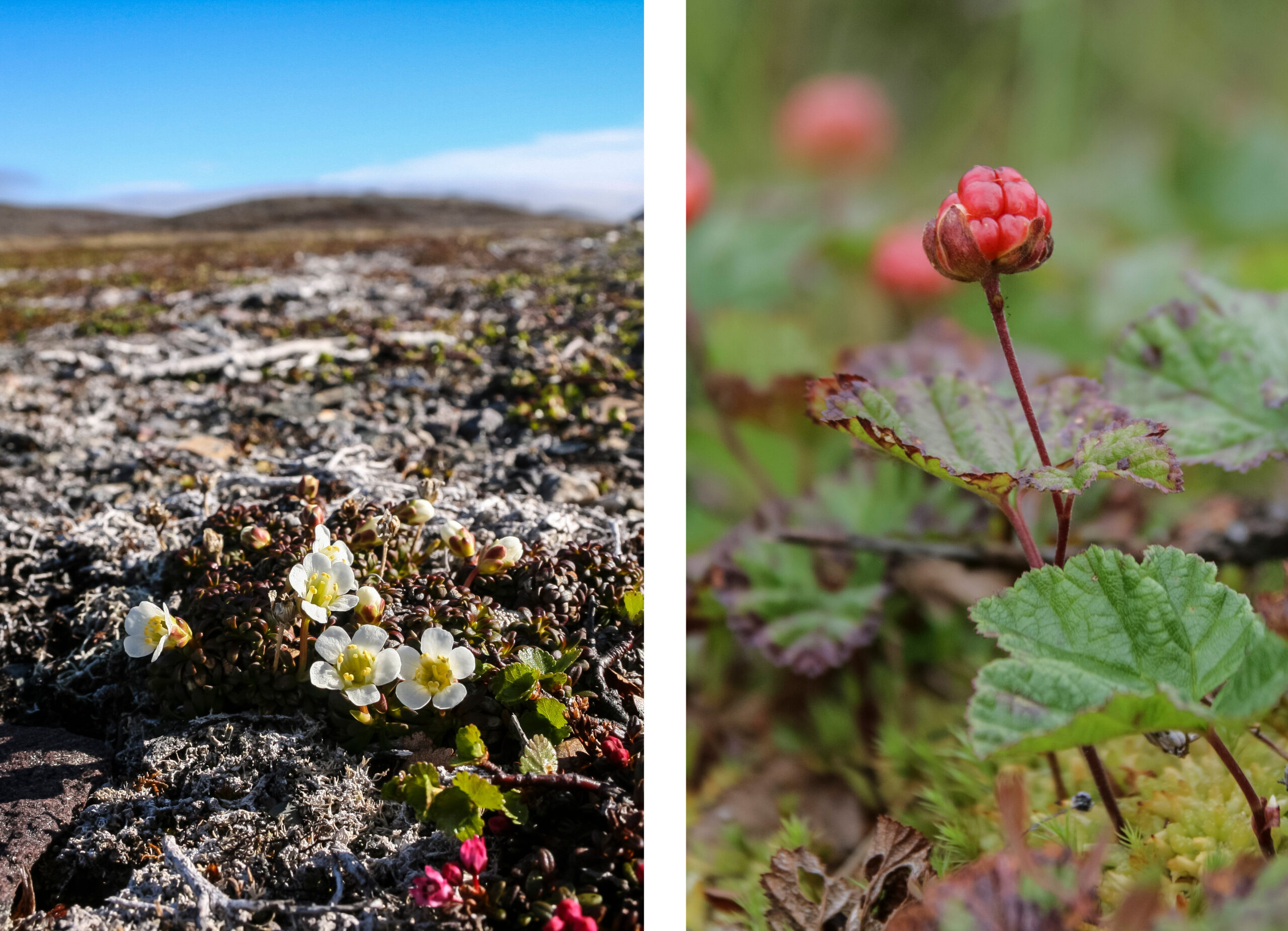
Diapensia (left) and Cloudberry (right)
Caledonian Pine Forest: The Scent of Resin and Old Time
Walking into a remnant of Caledonian pine forest feels like stepping into a cathedral built of light and resin. The Scots Pine here aren’t plantation trees; they’re individuals—gnarled, wide-crowned and spaced in a way that lets the sun reach the forest floor. That light is everything. It allows a rich ground flora to flourish: Bilberry, Cowberry, Ling and carpets of Wavy Hair-grass. One of my favourite moments in these woods is finding Twinflower, a species that seems to embody the forest’s quiet persistence. Its paired pink bells are easy to miss unless you’re already moving slowly. I’ve spent long minutes lying on my stomach photographing it, aware that I’m sharing space with a plant that once stretched across northern Europe but now survives in scattered Scottish pockets. Then there are the orchids. In June, the forest edges and glades can be dotted with Lesser Twayblade, Heath Spotted-orchid and the ghostly Coralroot Orchid, which steals its nutrients from fungi rather than photosynthesising. These are plants that reward patience and a willingness to look beneath the obvious.
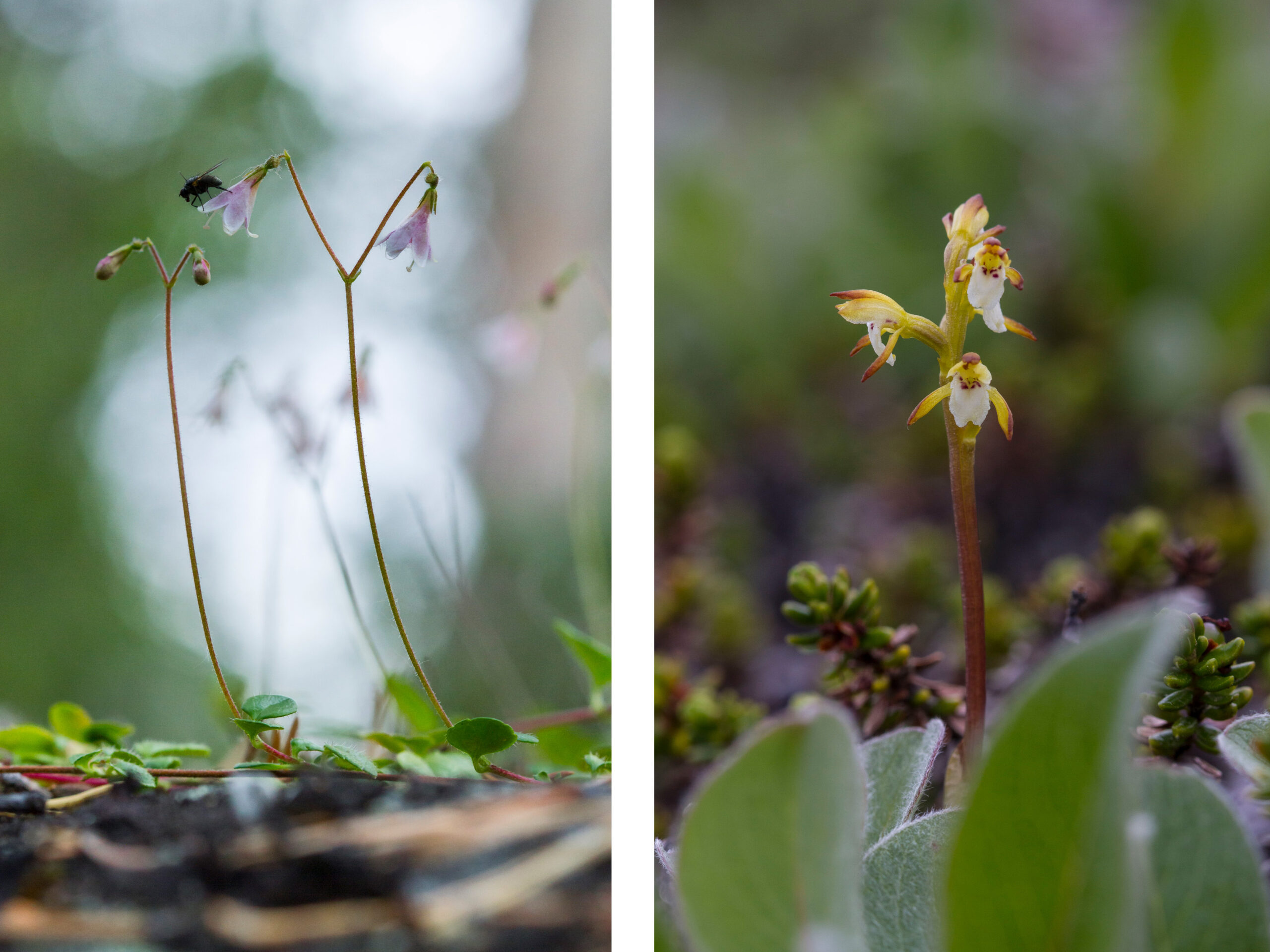
Twinflower (left) and Coralroot (right)
The Western Seaboard: Where Wind, Salt and Flowers Meet
The west coast is a different world entirely. The Atlantic shapes everything—climate, soil and the astonishing diversity of plants that thrive in the mild, wet air. Nowhere is this more evident than on the machair, those low-lying coastal plains found on the Hebrides and parts of the mainland. I’ve walked machair meadows in July where every step seems to release a new colour: Yellow Rattle, Red Clover, eyebrights, Meadowsweet, Bird’s-foot Trefoil and the delicate Irish Lady’s-tresses orchid. Machair flora is a product of shell sand, traditional grazing and centuries of human use. It’s one of the richest botanical habitats in Europe, yet it feels disarmingly simple—just wind, salt and flowers. The scent of Wild Thyme drifting across a white-sand beach is one of those sensory combinations that stays with you long after you’ve left. Further inland, the west coast’s Atlantic oakwoods—the so‑called “Celtic rainforest”—offer a different kind of richness. The trees themselves are modest, but the real story is in the mosses, liverworts and lichens that cloak every surface. I’ve run my hand along oak trunks so thick with bryophytes that the bark feels padded. Plants like Wilson’s Filmy-fern and liverworts of the genus Plagiochila thrive in the constant humidity. It’s a world measured in millimetres rather than metres.
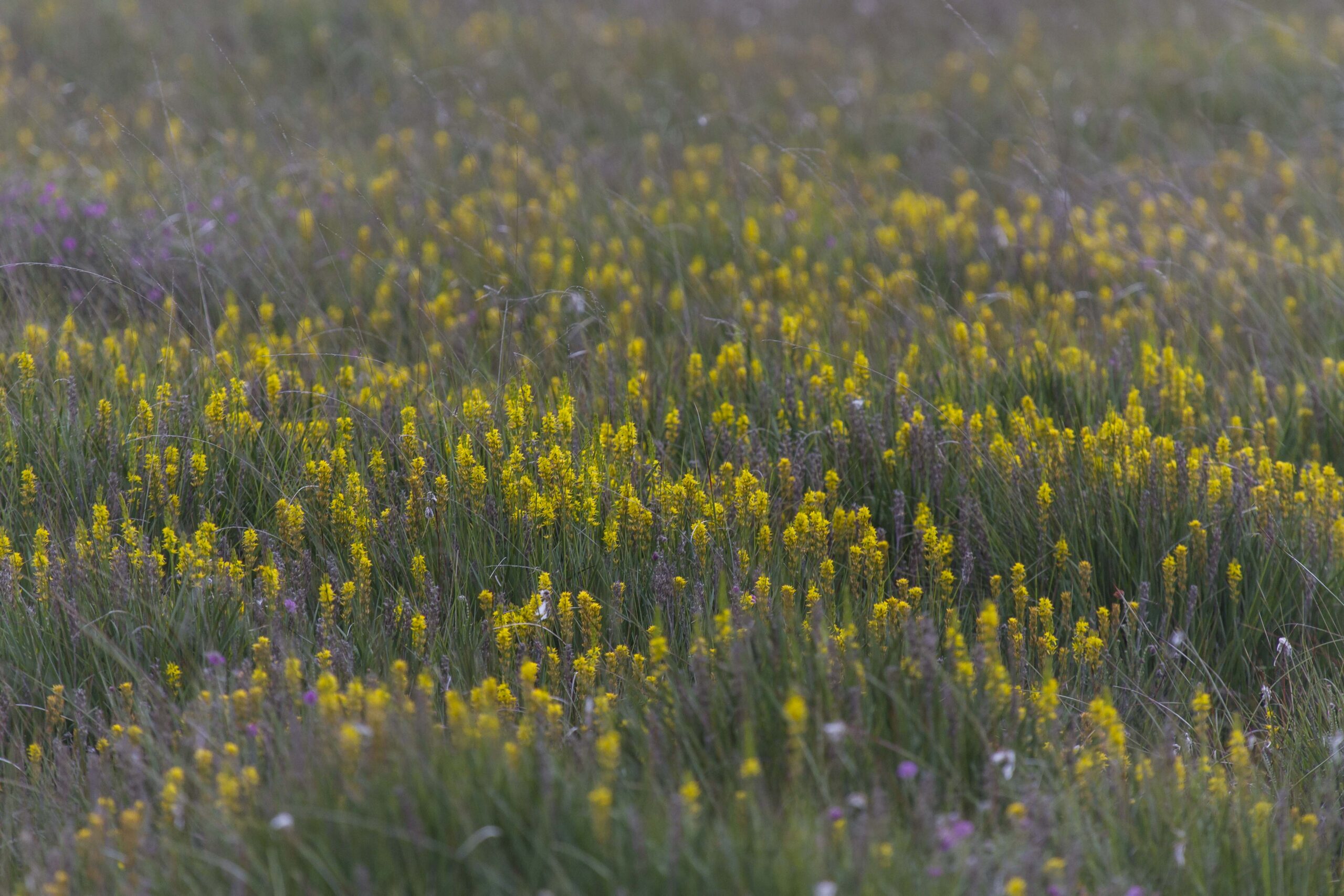
Bog Asphodel
The Flow Country: A Landscape Built by Plants
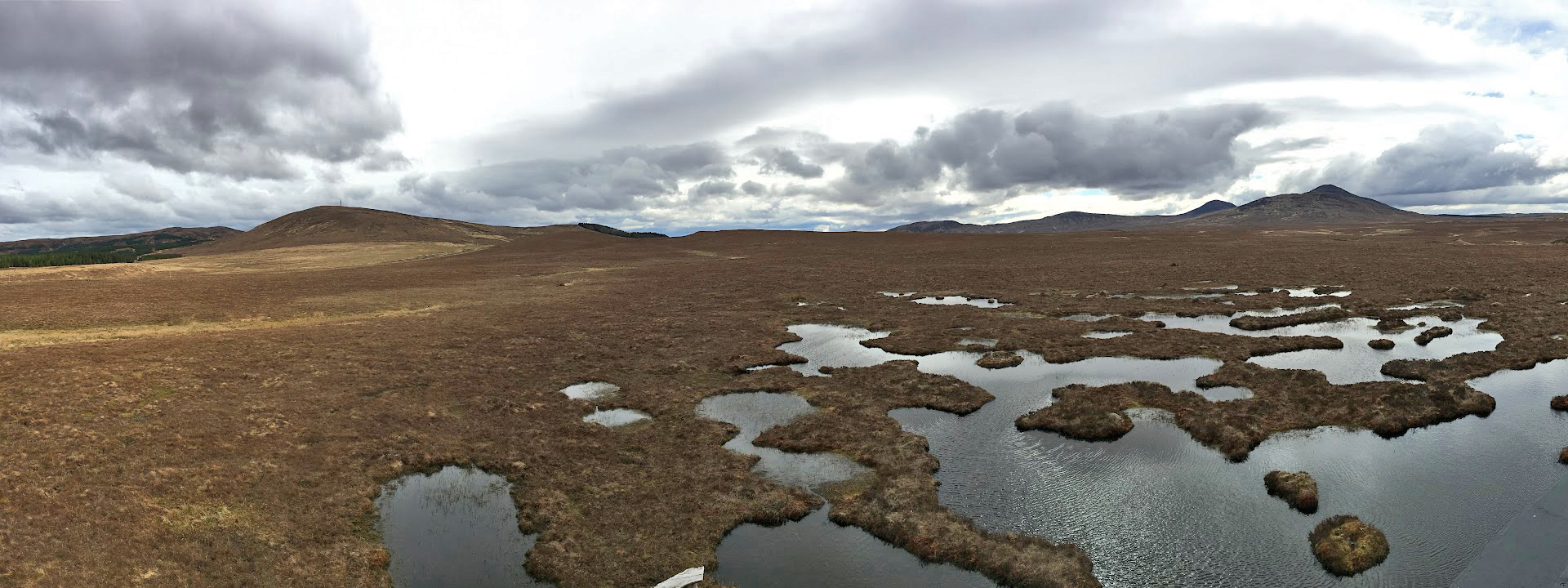
In the far north, the Flow Country stretches out in a mosaic of peatland, lochans and bog pools. It’s a landscape that can look empty from a distance, but up close it’s one of the most botanically distinctive places in Britain. Sphagnum mosses are the architects here, building peat layer by layer over thousands of years. Each species has its own colour—greens, reds, oranges—and together they form a living tapestry. Among the mosses grow Bog Asphodel, Common Cottongrass, Round-leaved Sundew and Cranberry, plants adapted to nutrient-poor, waterlogged conditions. I’ve spent hours here on hands and knees, marvelling at how much life exists in a place that seems, at first glance, so inhospitable. Why Scotland’s Flora Matters What strikes me most about Scotland’s flora is how deeply it reflects the country’s ecological history. These plants aren’t just species on a list; they’re indicators of land use, climate shifts and the resilience of natural systems. To understand Scotland’s landscapes, you have to understand its plants—not just the charismatic ones, but the quiet specialists that anchor each habitat.